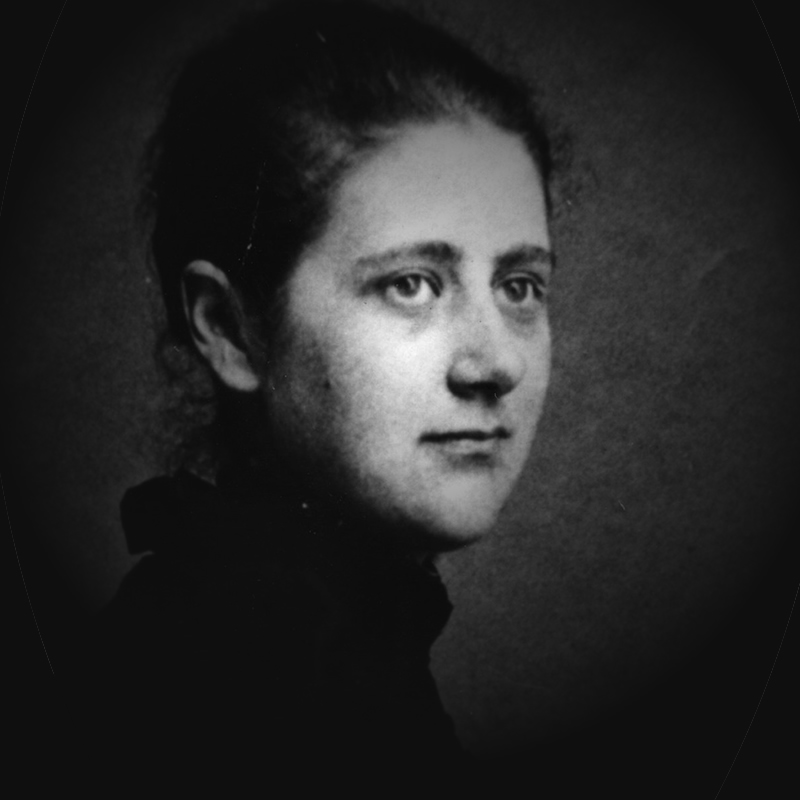
Beatrix Potter
Helen Beatrix Heelis, famously known as Beatrix Potter, was an English writer, illustrator and conservationist, best known for her children's books featuring animals, such as The Tale of Peter Rabbit.
- Home
- Resources, Facts & History
- Authors, Writers & Poets
- Beatrix Potter
Key Facts
- Was born Helen Beatrix Potter on 28th July 1866 in Kensington, London.
- Studied at the National Art Training School in South Kensington after spending most of her young life being educated at home.
- Worked as a skilled mycologist, completing work and experiments related to fungi and how it is produced.
- Self-published 250 copies of her first story 'The Tale of Peter Rabbit', in December 1901.
- The publisher Frederick Warne & Co. released the first official edition of 'The Tale of Peter Rabbit'.
- Married William Heelis on 15th October 1913, at St. Mary Abbots Church in Kensington, London.
- Worked closely with the National Trust to protect the heritage, conserve farming practices and protect land from modern development across the Lake District
- Passed away at her home in Castle Cottage in Near Sawrey, Lake District on 22nd December 1943, when she was 77 years old.
Early Life & Education
The famous author was born Helen Beatrix Potter on 28th July 1866 at her family's home at 2 Bolton Gardens in West Brompton, Kensington, London.
Beatrix Potter never attended a traditional school as a child but was instead, educated at home by a succession of governesses. Typical of a wealthy Victorian girl, Beatrix Potter received private lessons in subjects such as German, French and history.
However, much of her knowledge came from her own observations and independent research in the family's schoolroom, where Beatrix Potter and her brother kept a number of pets.
Realising that their daughter was talented, Beatrix Potter's parents arranged for her to attend formal drawing lessons and in 1878, she enrolled at the National Art Training School in South Kensington. Now known as the Royal College of Art, Beatrix Potter earned her Art Student's Certificate.
Early Work
Beatrix Potter started her working life from around 1887 as a scientist studying fungi, becoming a skilled mycologist, she produced botanically accurate drawings while conducting various experiments on how fungi is produced. As part of her work, Beatrix Potter produced a paper from her research titled 'On the Germination of the Spores of the Agaricineae', presenting it to the Linnean Society, a centre for the study of natural history, evolution and taxonomy, by a third party as no women were allowed to attend their meetings.
The professional art career of Beatrix Potter began in around 1890 when she sold a series of rabbit drawings to Hildesheimer & Faulkner, a greeting card company who used the designs for the Christmas cards.
Through the 1890s, Beatrix Potter began writing 'picture letters', to the children of her former governess, Annie Moore. One letter in particular, written to five-year-old Noel Moore in 1893, contained the first version of the story that would later become 'The Tale of Peter Rabbit'.
Commercial Publishing
Beatrix Potter began her story writing when she wrote an eight page illustrated letter to Noel Moore, the five year old son of her former governess, Annie Moore, in 1893.
In 1900, Annie Moore suggested that the original letters produced by Beatrix Potter could be published as a book. Borrowing the original letter given Noel Moore, Beatrix Potter used it as a foundation to create her first written story.
Publishing her first story initially proved difficult for Beatrix Potter with several publishers rejecting her work, eventually using her own money in December 1901 to print 250 copies of the story titled 'The Tale of Peter Rabbit'.
Beatrix Potter initially distributed copies to selected friends and family, selling other copies of the book for one shilling and two pence each, eventually producing another 200 copies of the story in a second print run.
Eventually, in 1902, the publisher Frederick Warne & Co. released the first official edition of 'The Tale of Peter Rabbit', which featured the now iconic colour illustrations which were famously created by Beatrix Potter.
Beatrix Potter went on to write and illustrate another 22 stories, publishing a total of 23 original 'Little Books', between 1902 and 1930 which were primarily published by Frederick Warne & Co.
The 23 Original Tales
Peter Rabbit disobeys his mother and sneaks into Mr. McGregor’s garden, where he gorges on vegetables and is nearly caught several times. After losing his shoes and jacket, Peter escapes exhausted and ill. The story explores naughtiness, consequence, and maternal care, with a realistic sense of danger balanced by gentle humor.
Published: 1901
Nutkin, an impudent red squirrel, repeatedly taunts Old Brown, a short-tempered owl who owns Owl Island. Unlike the polite squirrels, Nutkin refuses to behave and eventually loses part of his tail as punishment. The tale highlights recklessness, disrespect for authority, and natural consequences.
Published: 1903
A poor tailor falls ill just before Christmas, unable to finish a fine coat commissioned by the mayor. Mice secretly complete the coat overnight, except for one buttonhole. The story blends kindness, faith, and quiet magic, inspired by Potter’s love of craftsmanship.
Published: 1903
Peter Rabbit returns to Mr. McGregor’s garden with his cousin Benjamin. Benjamin is bolder and less fearful, but their adventure nearly ends badly when they are trapped under a basket. Peter’s father’s old clothes reappear, hinting at darker past events. Themes include bravado vs. caution.
Published: 1904
Two mice vandalize a doll’s house after discovering the food is fake. They later regret their actions and leave coins to compensate for the damage. The story examines disappointment, anger, and restitution, with sharp social observation.
Published: 1904
Lucie meets Mrs. Tiggy-Winkle, a hedgehog washerwoman who cleans animals’ laundry. The line between dream and reality is blurred. The tale celebrates domestic labor, kindness, and childhood imagination.
Published: 1905
Ribby the cat and Duchess the dog exchange pies for tea, but Duchess fears Ribby intends to eat her. Misunderstandings escalate until the truth emerges. A story about social anxiety and mistaken assumptions.
Published: 1905
A frog goes fishing but is nearly eaten by a trout and later chased by insects. He returns home soaked and shaken, preferring worms to adventure. A gentle reminder about knowing one’s limits.
Published: 1906
A rude rabbit steals food and is violently punished by unseen forces. Brief and stark, the tale delivers a blunt lesson on aggression and consequence.
Published: 1906
A kitten attempts to outwit a mouse but is repeatedly tricked. The mouse ultimately escapes. A playful story about overconfidence and cleverness.
Published: 1906
The story centres on Tom Kitten, a young, boisterous tabby cat, and his sisters Moppet and Mittens, who live with their mother, Mrs. Tabitha Twitchit, in a tidy country house. Mrs. Tabitha is intensely concerned with respectability, cleanliness, and proper behaviour, especially because she is expecting company for afternoon tea.
Published: 1907
Jemima seeks a place to hatch her eggs but is manipulated by a fox who plans to eat her. Farm dogs intervene, though her eggs are lost. A darker story emphasizing naivety, deception, and predation.
Published: 1908
Tom Kitten is captured by rats who plan to bake him into a pie. He narrowly escapes, but the rats steal food and cause chaos. The tale has strong gothic tension and realistic peril.
Published: 1908
Benjamin Bunny’s children fall asleep after overeating lettuce and are captured by Mr. McGregor. Their mother rescues them with help from Mr. McGregor’s wife. Themes include maternal ingenuity and teamwork.
Published: 1909
A cat and dog run a shop but extend too much credit and go bankrupt. After closing, they thrive individually. A surprisingly adult story about economics, generosity, and sustainability.
Published: 1909
Mrs. Tittlemouse, a meticulous mouse, struggles to keep her burrow clean as guests create messes. Order is restored after much effort. The tale reflects anxiety, control, and personal boundaries.
Published: 1910
Timmy the squirrel is mistaken for a thief and imprisoned in a tree by other squirrels. His wife rescues him. A tale of misjudgment and community fear.
Published: 1911
Fox Mr. Tod and badger Tommy Brock kidnap a rabbit, leading to complex revenge and rescue schemes. Darker and more intricate, it explores self-interest, grudges, and moral ambiguity.
Published: 1912
Pigling is sent to market but becomes lost and terrified, repeatedly escaping danger until he finally reaches home. The story focuses on fear, resilience, and relief.
Published: 1913
A collection of short rhymes featuring familiar characters. Lighthearted and celebratory, it focuses on play and rhythm rather than plot.
Published: 1917
A country mouse and town mouse visit each other’s homes and discover they prefer their own lifestyles. A gentle fable on comfort, identity, and environment.
Published: 1918
Another collection of rhymes, gentler and more domestic, celebrating daily life, animals, and simple pleasures.
Published: 1922
Pig Robinson runs away to sea, is stranded on an island, and returns home wiser. One of Potter’s later works, it explores adventure, independence, and homesickness.
Published: 1930
Personal Life
Beatrix Potter became engaged to her editor, Norman Warne, in July 1905. However, the engagement was short lived when tragically, Norman Warne died from Leukaemia, just one month later in August 1905.
Devastated by his death, Beatrix Potter wore Norman Warne's engagement ring on her right hand for the rest of her life, eventually moving to the Lake District to start a new life at Hill Top Farm.
Beatrix Potter would later meet William Heelis, a solicitor from Hawkshead and even though her parents initially objected, Beatrix Potter would go on to marry William Heelis on 15th October 1913, at St. Mary Abbots Church in Kensington, London.
Beatrix Potter officially became Mrs. Helen Beatrix Heelis but would continue to use her maidan name on her published books and stories. Shortly after the wedding, the newly married couple moved to Castle Cottage in Near Sawrey in the Lake District, keeping Hill Top Farm as a private studio and workspace.
Beatrix Potter and William Heelis had no children of their own but played an active part in William Heelis's extended family, while sharing a passion for the countryside and land conservation.
Land Conservation & National Trust
Beatrix Potter's love of the countryside grew into a conservation strategy, developing a close partnership with Canon Hardwicke Rawnsley, the co-founder of the National Trust, a charity which focuses on heritage and nature conservation. Beatrix Potter met her future husband William Heelis, who acted as her legal advisor during the purchase of a large amount of land in the Lake District.
Working closely with the National Trust to identify land and properties which were being broken up and sold to property developers, Beatrix Potter purchased land and farms in an effort to 'Purchase to Protect', preventing any planned developments from occurring. This also included ongoing campaigns against local developments in the Lake District, famously opposing the introduction of hydroplanes on Lake Windermere.
One major acquisition which was made by Beatrix Potter as part of the 'Purchase to Protect', strategy, was the purchase of the 5,000-acre Monk Coniston Estate, simply to prevent it from being divided and sold. Shortly after the purchase, Beatrix Potter offered half of the 5,000-acre Monk Coniston Estate at cost to the National Trust.
As part of her conservation efforts, Beatrix Potter restored unused farms, such as the 1,900-acre Troutbeck Park, turning them into productive centres for breeding pedigree Herdwick Sheep.
Alongside her conservation efforts, Beatrix Potter founded a district nursing trust to improve healthcare for local villages in the Sawrey area. Beatrix Potter also became an authority on traditional Lakeland crafts, antique furniture, and stonework, restoring her farms which used original methods and materials.
The land and conservation efforts of Beatrix Potter eventually became the responsibility of the National Trust who were gifted over 4,000 acres of land which included 15 farms and several cottages. This includes the legal requirement in which the National Trust continue to manage the 15 farms as working farms that graze pure Herdwick sheep.
Death & Cremation
Beatrix Potter was 77 years old when she passed away at her home in Castle Cottage in Near Sawrey, Lake District on 22nd December 1943, with her husband, William Heelis, was by her side when she died. The cause of death was due to complications from pneumonia and heart disease.
Beatrix Potter was cremated on the same day she had passed away, 22nd December 1943, at Carleton Crematorium in Blackpool, Lancashire.
The task of scattering the ashes of Beatrix Potter was performed by Tom Story, Beatrix Potter's farm manager, who never revealed the exact spot but followed the exact instructions to scatter the ashes, somewhere near Castle Cottage in Near Sawry.
Beatrix Potter didn't wish to have a headstone that would encourage crowds to visit her memorial. The spot in which the ashes of Beatrix Potter were scattered, remain a secret but some accounts do suggest that it may have been near the southern area of Esthwaite Water, where Beatrix Potter and her husband, William Heelis, frequently took walks.